|
Szczegóły Produktu:
|
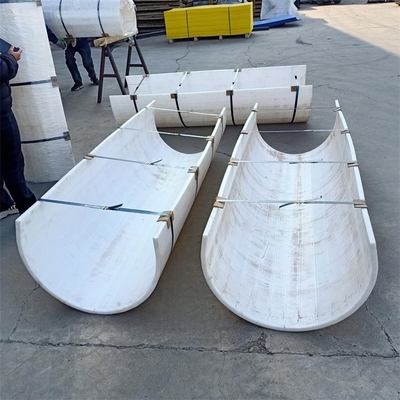
| Przedmiot:: | Polietylen UHMW Wykładzina zsypu Plastikowa wyściółka bunkra | Tworzywo: | Polietylen UHMW |
|---|---|---|---|
| Kolor:: | Naturalny biały, czarny, żółty | Rozmiar:: | 1220mm*2440mm |
| Grubość:: | 5-200mm | Gęstość:: | 0,94-0,98 g/cm3 |
| Usługa przetwarzania:: | Cięcie, formowanie | Funkcja: | Samosmarująca, nieprzywierająca wykładzina bunkra z tworzywa sztucznego |
| Podkreślić: | Wkładka z polietylenu UHMW,podszewka z polietylenu UHMW,wkładka zsypu UHMWPE |
||
Listing 37360286
Wykładzina polietylenowa UHMW sprzedawana przez Tangyin Taixing Engineering Plastics Co., Ltd. jest rejestrowana jako płyta o wymiarach 1220 mm x 2440 mm wykonana z polietylenu UHMW, o grubości 5-200 mm, gęstości 0,94-0,98 g/cm3, dostarczana w kolorze naturalnej bieli, czarnym lub żółtym. Jest to wykładzina ślizgowa do zasobników, zsypów i silosów, wyceniana na zasadach negocjacyjnych z minimalnym zamówieniem 10 sztuk.
| Recorded field | Value held for this listing |
|---|---|
| Manufacturer | Tangyin Taixing Engineering Plastics Co., Ltd. |
| Model Number | UHMW polyethylene Chute Liner |
| Item description | UHMW polyethylene Chute Liner Plastic Bunker Lining |
| Material | UHMW polyethylene |
| Plate size | 1220 mm x 2440 mm |
| Thickness band | 5 mm to 200 mm |
| Density | 0.94-0.98 g/cm3 |
| Colours | Natural white, black, yellow |
| Recorded feature | Self lubricating, non-sticking bunker lining |
| Processing service | Cutting, moulding |
| Place of origin | China |
| Certification | Quality management system covering the manufacture of polyethylene sheet and machined plastic products |
| Minimum order quantity | 10 pieces |
| Price basis | Negotiable |
| Payment terms | T/T, Western Union |
| Supply ability | 50,000 pieces per month |
| Delivery time | 15-20 days after deposit received |
| Packaging | Wooden crate or pallet |
Conflict note: the original description's size table lists 1200 x 2400 mm, 1200 x 4000 mm and a corrupted entry reading 12100 x 3100 mm, none of which matches the attribute record; the record value of 1220 mm x 2440 mm governs, and the corrupted entry is treated as a typing error rather than as a format. Values that appear only in that description table - a dynamic friction coefficient of 0.05-0.11, water absorption below 0.01 %, impact strength of 140 kJ/m2 and above, tensile strength of 22 MPa, breaking strength of 42 MPa and a temperature range of -269 deg C to +90 deg C - are reported here as description-sourced context, not as attribute records, because the attribute set for this listing carries no value for them.
| Variable | Recorded position | What must be fixed on the order |
|---|---|---|
| Plate thickness | Recorded as a band, 5 mm to 200 mm | The band is wide enough that two orders for the same liner can behave very differently on a chute; the exact gauge, not the band, has to be written on the purchase order |
| Plate size | Fixed at 1220 mm x 2440 mm | Cutting is a recorded processing service, so a smaller segment size is produced by cutting this plate rather than by a separate mould |
| Colour | Natural white, black or yellow | Colour must be named per order; the three recorded colours are not interchangeable in a stock plan because a plant usually standardises one for inspection reasons |
| Edge and hole state | Not recorded | Countersinking and hole patterns are drawing-driven work under the recorded cutting and moulding service |
How the liner is built
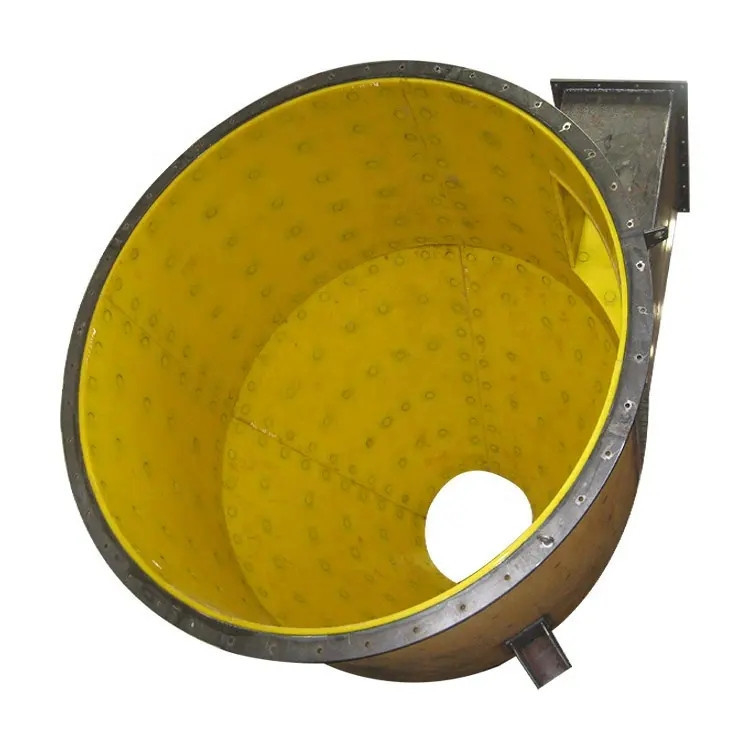
A chute liner is not a sheet that happens to be installed on a slope; it is a two-face component. One face is the sliding face that coal, cement or grain runs across, and it is the face the record describes as self lubricating and non-sticking. The other face is the back, which is either clamped flat to the steel shell or countersunk over it, and every mechanical decision on site is made on that back face. The UHMW polyethylene Chute Liner from Tangyin Taixing Engineering Plastics Co., Ltd. is made as a solid pressed plate, 1220 mm x 2440 mm at the recorded base size, so the thickness of the plate is the only structural reserve the liner has.
The recorded density band of 0.94-0.98 g/cm3 sits at the high end of polyethylene, and at that density the material is both hard enough to resist grooving and slippery enough that bulk material does not key into the surface. The recorded feature is self lubricating, meaning the low-friction behaviour does not depend on grease or an added lubricant film that a coal bunker would strip away within days. The original description compares the dynamic friction behaviour with polyamide and acetal under water lubrication and with PTFE under dry sliding, and quotes a dynamic friction coefficient of 0.05-0.11; that figure is description-sourced, but the mechanism it describes is the reason a liner is specified at all - the bulk material slides on a boundary layer at the liner surface instead of gripping the steel.
Impact strength matters on the same face. A bunker is charged by a drop, not by a steady feed, and a liner that cracks at the impact point loses its sliding face at exactly the location where material stalls. The description records impact strength of 140 kJ/m2 and above for this material family, which is the property that lets the plate take a lump impact without a through-crack.
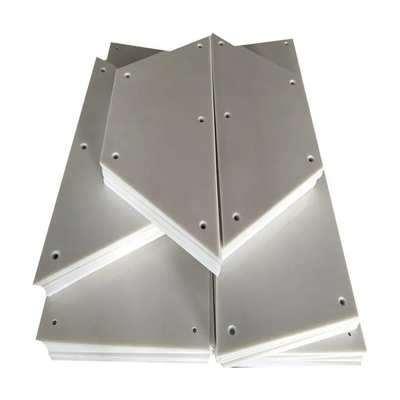
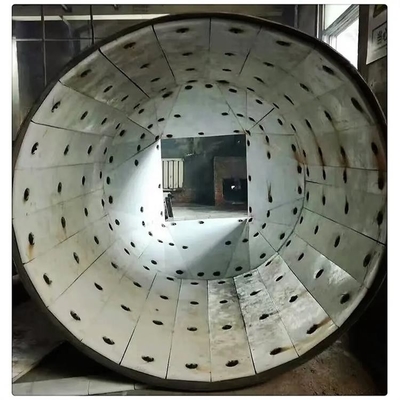
The plate arrives at 1220 mm x 2440 mm, which is rarely the size of a bunker wall. Cutting and moulding are recorded as the processing services, so a wall is lined with segments cut from this plate, and the segment layout is a design decision that has to be made before the order: segment size drives the number of joints, the number of fasteners and the amount of off-cut. Joints should be planned away from the point of maximum impact and away from the steepest part of the discharge throat, because a joint is a step and a step is where material hangs.
The thickness band of 5 mm to 200 mm covers both a thin facing that follows a curved shell and a thick plate that can be countersunk deeply enough to bury a fastener head below the sliding face. That is the engineering reason the gauge has to be named on the order: a countersink needs a plate thick enough that the fastener head sits under the face with material left beneath it, and a plate ordered too thin for the chosen fastener will either show a proud head that material catches on, or will be pulled through at the hole. Countersunk fasteners, set flush or slightly recessed, are the normal fixing for this construction; a hex head standing proud of a liner face is a trap for every lump that passes.

A liner segment has four edges and each one is a potential catch point. The edge at the top of a slope should be tucked under a lip or a retaining strip so material cannot work behind the plate; the edges at a butt joint should be cut square and set with a small gap so the two plates do not crush into each other as the steel shell moves; and the bottom edge should run out into the discharge opening rather than stop short of it, because a short edge leaves a ledge of exposed steel that wears a step into the shell behind the liner.
Colour is a working aid here rather than a decoration. The record offers natural white, black and yellow; a plant that inspects a bunker through an access door will generally see wear, embedded fines and missing fasteners more easily on a light face than on a black one, while a black face hides staining in a coal handling stream. The choice is recorded as an option and should be stated per order so that replacement segments match the liner already in service.
The UHMW polyethylene Chute Liner is recorded for bulk material handling: coal bunkers and coal handling chutes, cement and raw meal silo lining, grain chutes and storage, sieve plates and wear parts in mining, and corrosion-resistant mechanical parts in chemical plant. That list is the boundary. The liner is a wear and flow component fixed to a structure, and it does not replace the structure.
It works where the problem is stalling, hang-up, build-up or abrasive wear on a steel or concrete face. A coal bunker that bridges over its outlet, a chute that plugs at a change of slope, a silo that holds a ring of material at the transition - these are sliding-face problems, and a low-friction self-lubricating plate addresses them directly by removing the grip the bulk material has on the wall.
It also works in wet and freezing conditions better than an unlined steel face, because the plate does not absorb water (the description records water absorption below 0.01 %) and therefore does not grow an ice key at the surface. That does not make it an ice-proof liner; it means the bond between wet coal and the wall is weaker on this face than on steel.
It is not a structural wall, a pressure part or a hot-face refractory. The recorded service temperature from the description is -269 deg C to +90 deg C, and the upper end of that band is a material property, not an invitation to line a hot duct: a coal bunker lining operates far below that figure in normal service, and any application near the top of the band has to be referred to the manufacturer before the order rather than assumed. No fire rating is recorded, so the liner must not be used as a fire barrier or in a location where a fire-rated separation is required.
It is also the wrong part where the duty is a high-point-load bearing surface, a structural floor, or a face exposed to sharp, hot or heavily mineral-loaded impact at high velocity. The liner resists sliding abrasion; it is not armour plate, and no load rating or velocity limit is recorded for this listing.
Prepare the shell first. A liner pulled down over a buckled or pitted steel face will bridge the high spots and rock on them, and every rock point becomes a place where the plate frets and thins. Straighten, clean and, where the shell is heavily pitted, build up the substrate before any plate goes on. Then set out the segment layout from the top of the slope downward so that each upper segment overlaps or tucks under the one above, and mark fastener positions against the structural members behind, not against the plate edges.
Drill for the fastener, not through a pre-punched hole. Oversize the hole in the plate so the polyethylene can move against the steel without loading the fastener shank, countersink to suit the head, and tighten until the head is just at or below the face. Work from the centre of each segment outward so that trapped air and any bow are pushed to the edges instead of being locked in the middle.
Leave the joints open by a small, consistent gap and keep the joint line straight. Fill nothing into the joint: a hard grout or a flush weld in a liner joint creates a hard spot that wears the passing material and the plate around it.
Confirm the plate thickness delivered against the thickness written on the order, because the record only gives a 5-200 mm band; confirm the colour matches the liner already in service; confirm the density sits inside the recorded 0.94-0.98 g/cm3 band; and confirm that the countersink depth leaves material under the fastener head at every hole. Any of these wrong means the segment goes back, not onto the wall.
Tangyin Taixing Engineering Plastics Co., Ltd. manufactures the UHMW polyethylene Chute Liner at its works in Anyang, China. The company states more than 20 years of experience in engineering plastics, a plant area of more than 25,000 square metres and an annual output of more than 8,000 tons, and it names UHMWPE liner among its core product lines alongside UHMWPE board, outrigger pads, ground mats, conveyor rollers and machined special-shaped parts. The same manufacturing and export organisation also appears on this site as Beijing Silk Road Enterprise Management Services Co.; that is a second recorded name for one business, not a second factory.
The plate is consolidated on the moulding press and finished on the CNC precise finishing machine, the carving machine and the sander, with AutoCAD based design support for segment layouts and hole patterns. For a chute liner the finishing step is the one that decides whether the job works: a segment cut square, with a countersink at the right depth and a dressed edge, beds flat on the shell, while a segment with a ragged edge and a shallow countersink will stand proud and catch material from the first shift.
In-house checking uses the abrasion tester for the wear face, the universal mechanical tester for the recorded mechanical values, and the oxygen index tester as part of the same laboratory. The cutting and moulding services recorded for this listing are carried out inside that same plant, which is why a liner segment and its hole pattern can be quoted as one item rather than as sheet plus a separate machine shop.
The recorded certification is a quality management system covering the manufacture of polyethylene sheet and machined plastic products. It is a system certification: not a product-by-product approval, and not a material test report. No certificate number, issuing body or further scope statement is recorded, so none is claimed here.
The minimum order quantity is 10 pieces, which is low enough that a single chute repair can be ordered without building stock, and high enough that a works run is worthwhile. Supply ability is 50,000 pieces per month, so the constraint is the 15-20 day window after deposit rather than capacity. Packaging is a wooden crate or pallet, which suits a plate that must arrive flat and unscuffed on its sliding face. Payment is T/T or Western Union.
In planning terms: fix the thickness and colour first, since neither price nor packing can be settled without them; expect the plate to travel as a crate or pallet load rather than loose; and place the order against the deposit date, because the 15-20 day clock is recorded as starting when the deposit is received, not when the enquiry is sent.
The UHMW polyethylene Chute Liner is recorded at 1220 mm x 2440 mm with a thickness band of 5 mm to 200 mm, density 0.94-0.98 g/cm3, in natural white, black or yellow. Those are the values held for this listing and they are what a quotation is built from.
Note that the thickness is a band, not a single figure. Tangyin Taixing Engineering Plastics Co., Ltd. manufactures across that whole range, so the plate you receive is only as predictable as the gauge written on your purchase order.
Countersink each fastener so the head sits at or just below the sliding face, and leave material under the head rather than cutting through to the back. That is why gauge and fastener are chosen together on the UHMW polyethylene Chute Liner: a plate at the thin end of the recorded 5-200 mm band cannot bury a large head, while a thick plate can.
Drill the plate hole oversize so the polyethylene can move on the steel without loading the shank, and tighten only until the head is flush. Over-tightening dishes the plate around the hole and creates a shallow crater that collects fines and starts a wear ring. Tangyin Taixing Engineering Plastics Co., Ltd. can cut and mould segments to a supplied hole layout.
Bulk material stalls where the wall angle drops below what the material needs to keep moving, and a joint is a local step that raises that requirement. On the UHMW polyethylene Chute Liner the joint lines should therefore run across the steepest part of the throat as few times as possible, with segments laid from the top of the slope downward so each upper plate tucks under the one above.
That is also why the 1220 mm x 2440 mm plate is treated as a stock size rather than a wall size: Tangyin Taixing Engineering Plastics Co., Ltd. records cutting and moulding as the processing services, so the segment shape is cut to the wall rather than the wall adapted to the plate.
Leave a small, consistent gap and keep the joint line straight. Two plates of UHMW polyethylene Chute Liner butted hard together will crush into each other as the steel shell moves and as the plate expands, and the crushed edge lifts into a lip that material catches on.
Do not fill the gap with grout or a hard compound. A hard filler in a liner joint wears differently from the plate and quickly stands proud, and on a coal bunker that proud line is where the plug starts. Tangyin Taixing Engineering Plastics Co., Ltd. supplies the plate cut to size; the gap is set on site against the segment layout.
Bridging starts where the bulk material grips the wall: at a change of section, at a rough or pitted steel face, at a proud fastener or at a step between plates. The UHMW polyethylene Chute Liner is recorded as self lubricating and non-sticking, so the material slides on the plate instead of keying into steel, and the recorded density band of 0.94-0.98 g/cm3 gives the face enough hardness to hold that behaviour under abrasion.
The liner removes the grip; it does not change the bunker's geometry. Where the outlet itself is too narrow for the material, or the wall angle is well below the flow angle, Tangyin Taixing Engineering Plastics Co., Ltd. can supply the plate but the discharge design still has to be corrected.
Ten pieces of the 1220 mm x 2440 mm UHMW polyethylene Chute Liner is a small enough lot to cover a single chute or bunker section without building stock, which suits a planned shutdown repair. Cutting is a recorded service, so those ten plates can be delivered as the segment sizes the wall needs rather than as ten full plates.
Because the minimum is a piece count and not a weight, the practical planning question is how many segments the ten plates will yield once the layout is cut. Tangyin Taixing Engineering Plastics Co., Ltd. records a supply ability of 50,000 pieces per month, so the ten-piece minimum is a commercial threshold, not a capacity limit.
Packaging is recorded as a wooden crate or pallet for the UHMW polyethylene Chute Liner. A plate travels flat and protected on a crate or pallet, which matters because the sliding face is the functional surface: a plate that has been dragged across a truck bed or stacked on rubble arrives with score marks that become wear initiation points.
Unload and store the crate flat, not on edge. A 1220 mm x 2440 mm plate stood on edge for a long period takes a set that shows as a bow when it is laid on the wall, and a bowed segment from Tangyin Taixing Engineering Plastics Co., Ltd. will not bed down without being pulled flat by its fasteners.
Delivery of the UHMW polyethylene Chute Liner is recorded as 15-20 days after deposit received, with payment by T/T or Western Union and a negotiable price basis. Because the clock starts on the deposit, a shutdown date has to be planned backwards from the deposit transfer, not from the enquiry.
Tangyin Taixing Engineering Plastics Co., Ltd. records a supply ability of 50,000 pieces per month, so for an order near the 10-piece minimum the delivery window is the binding constraint. Add the sea freight transit and the crate handling at destination to the 15-20 days when setting the shutdown date.
Osoba kontaktowa: Mr. Sales
Tel: +86 152 1104 0646


 Polish