|
Szczegóły Produktu:
|
| Przedmiot:: | Odporna na ścieranie plastikowa podkładka do hokeja na lodzie z HDPE | Tworzywo: | 100% dziewiczy PE |
|---|---|---|---|
| Kolor:: | Naturalny biały, żółty | Rozmiar:: | 1220 mm * 610 mm |
| Grubość:: | 3-10 mm | Gęstość:: | 0,94-0,98 g/cm3 |
| Usługa przetwarzania:: | Cięcie, formowanie | ||
| Podkreślić: | Tablica do ćwiczeń hokejowych HDPE,tablica do ćwiczeń hokejowych 24x48 cali,podkładka do strzelania z lodu 24x48 |
||
Listing 37540091
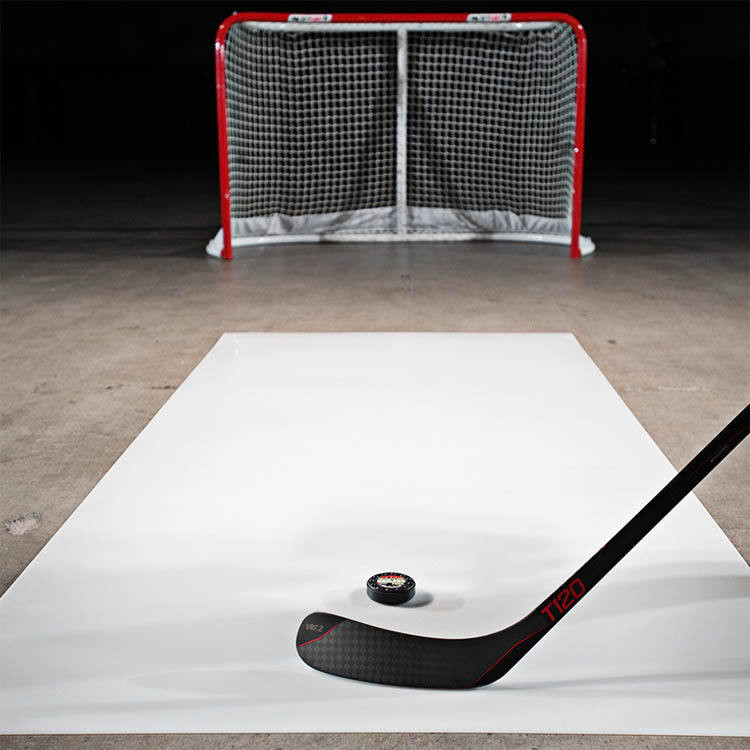
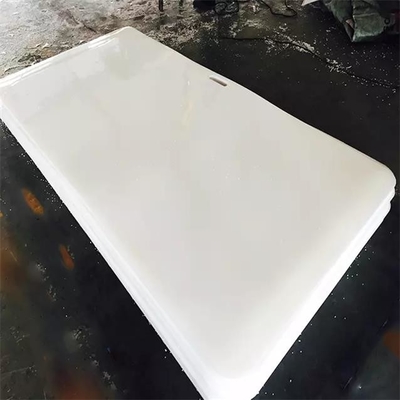
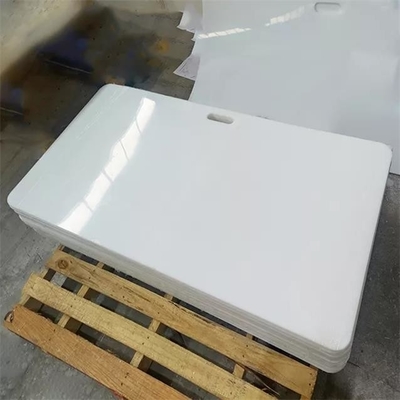
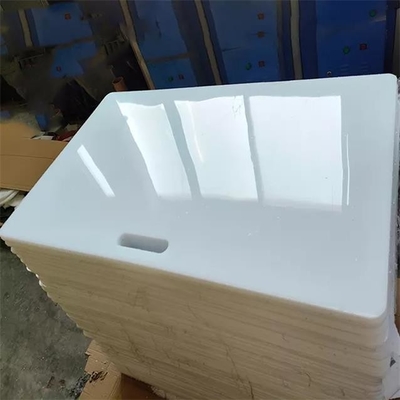
Deska do hokejowych ćwiczeń z HDPE firmy Tangyin Taixing Engineering Plastics Co., Ltd. to arkusz o wymiarach 1220 mm x 610 mm wykonany w 100% z dziewiczej polietylenu, o grubości 3-10 mm, gęstości 0,94-0,98 g/cm3, w naturalnym białym lub żółtym kolorze, cięty i formowany jako podkładka treningowa do strzelania krążkiem, podawania i operowania kijem poza lodowiskiem.
| Recorded field | Value held for this listing |
|---|---|
| Manufacturer | Tangyin Taixing Engineering Plastics Co., Ltd. |
| Model Number | HDPE Hockey Practice Board |
| Item description | Antyścierna plastikowa pomoc treningowa do hokeja na lodzie, podkładka do strzelania krążkiem z HDPE |
| Material | 100% dziewiczy PE, polietylen o wysokiej gęstości |
| Board size | 1220 mm x 610 mm (24 cale x 48 cali) |
| Thickness | 3 mm do 10 mm |
| Density | 0,94-0,98 g/cm3 |
| Colours | Naturalny biały, żółty |
| Processing service | Cięcie, formowanie |
| Place of origin | Chiny |
| Certification | System zarządzania jakością obejmujący produkcję arkuszy polietylenowych i obrobionych produktów z tworzyw sztucznych |
| Minimum order quantity | 100 kilogramów |
| Price basis | Do negocjacji |
| Payment terms | T/T, Western Union |
| Supply ability | 50 000 kilogramów miesięcznie |
| Delivery time | 15-20 dni po otrzymaniu zaliczki |
| Packaging | Drewniana skrzynia lub paleta |
Source note: the original description opens with a synthetic-ice rink paragraph, then in the same size row lists a plastic fence board with a steel frame and yellow skirting line in 2 m and 1 m lengths, and finishes with a coal, cement and mining chute-lining service list. None of that describes this part; it is template text carried in from the rink and liner listings. The attribute record governs, so the board on this page is the 1220 mm x 610 mm HDPE pad and nothing else. A dynamic friction coefficient below 0.09, tensile strength above 30 MPa, compressive strength of 42 MPa and above, surface resistivity of 4.9 x 10^13 ohm, impact strength of 140 kJ/m2 and above and water absorption below 0.01 % appear only in the description table; they are reported as description-sourced context, not as attribute records. The description prints the friction figure with a percent sign, which is a unit error - it is a coefficient and is treated as one.
| Pad size | Status for this listing | How it is treated on this page |
|---|---|---|
| 24 in x 48 in, 1220 mm x 610 mm | Recorded in the attribute set | This is the delivered board. Every dimension on this page refers to it, and the 100 kg minimum is sized against this pad |
| 28 in x 52 in, 1320 mm x 711 mm | Named in the description only | Reported as a size the description mentions, not as an option recorded for this listing; it cannot be ordered from this page without a separate quotation |
| 30 in x 60 in, 1524 mm x 762 mm | Named in the description only | Same status as above. Any request for a larger pad is a new enquiry, not a variant of this model number |
| Thickness inside 3-10 mm | Recorded as a band | The exact gauge is chosen per order; a 3 mm pad and a 10 mm pad of the same footprint behave differently under a puck impact and are packed differently |
How the part is made
The HDPE Hockey Practice Board is a flat plate with two functions built into one face: a low-friction glide surface for the puck and the blade, and a sacrificial layer that takes the abrasion of a stick repeatedly striking the same area. Tangyin Taixing Engineering Plastics Co., Ltd. presses the board from 100 per cent virgin PE at a density of 0.94-0.98 g/cm3, then cuts and moulds it to the 1220 mm x 610 mm footprint in thicknesses from 3 mm to 10 mm. Nothing about the pad is a coating; the glide face is the material itself, and that is why the pad keeps working after the surface has been scored.
Virgin resin is recorded for this listing rather than regrind, and on a shooting pad that is the property that matters most. Regrind carries inclusions and gels, and a gel on a glide face is a bump: the puck hops, the blade catches, and the pad develops a wear patch around the inclusion. A virgin board has a continuous face, so the puck travels on the polymer rather than across defects.
The recorded density band of 0.94-0.98 g/cm3 is the hardness side of polyethylene. A denser board is a harder, slicker board that holds its flatness under a sliding load, and it is the reason the pad can be as thin as 3 mm and still behave like a surface rather than a mat. The description puts the dynamic friction coefficient below 0.09; that is description-sourced, but the mechanism it describes is the whole product - the puck slides because the interface, not the puck, is doing the work.
A shooting pad at the thin end of the recorded 3-10 mm band is a sheet that must be laid on a flat, hard substrate; it has almost no ability to bridge a gap or absorb a step. At the thick end it can take a light bevel and still keep a working flat area, and it survives being carried by a handle cut into the edge. The description lists beveled edges as a feature, and the engineering reason is specific: a puck rolling or sliding toward the pad must climb onto the face without a square lip catching it, and a square lip is also what a stick blade digs into when the player follows through at the edge.
An integrated carry handle is also listed. On a board of this size a handle is a cut-out or a moulded feature in the edge; either way it removes material from the edge zone, which is why a handle on a 3 mm board has to be cut with a generous radius rather than a sharp corner - a sharp internal corner in thin HDPE is a crack starter under repeated carrying load.
The face that matters is the one facing up. A pressed HDPE face carries a faint directional pattern from the press, and on a natural white board that pattern is nearly invisible while on a yellow board it reads more clearly. Neither is a defect, but a pad that has been sanded on the glide face will glide differently from one that has not, so the buyer should expect the face to be as pressed unless a finish is specified on the drawing.
Water absorption below 0.01 % in the description supports the same point from another angle: the pad does not swell, so it does not develop high and low spots after being left out in rain. That is what allows the pad to be used outdoors and then brought inside without a drying period.

The HDPE Hockey Practice Board is recorded for off-ice training: shooting, passing and stick handling, with the puck gliding on an HDPE face instead of on pavement. Its boundary is set by what a 3-10 mm plate can and cannot do, and by the fact that it is a practice surface rather than a structural panel.
It works laid on a flat driveway, a garage floor, a concrete apron or a synthetic rink surface, as a shooting lane for one or two players. It works because the pad protects the stick from rough pavement as much as it protects the pavement from the stick: the recorded feature list names exactly that, and it is the reason a player uses a pad rather than practising on concrete. It also works as a small portable training station, since the 1220 mm x 610 mm board is a size one person can carry and the description records a carry handle.
It works outdoors as well as in, subject to the UV point below, and it works wet: a pad that absorbs almost no water does not soften or swell after rain, so a session does not depend on the surface being dry.
It is not a skating surface. Skate blades concentrate load on a very small edge, and a 3-10 mm HDPE plate on a hard substrate is not the construction the company offers for skating; the synthetic ice rink product line is a different item. A pad used under skates will score through and will not return the glide the rink product is designed for.
No UV rating, stabiliser content or exposure period is recorded for this listing. The description lists UV protection among the board's features, but a feature list is not a rating, so this page does not state an outdoor service life. Where the pad is to live outdoors permanently, the buyer should ask for the exposure requirement to be confirmed in writing before ordering.
Nor is the pad a load-bearing panel, a ramp with unsupported span, or a barrier. It should never be laid across a gap, an opening or a soft surface where it will dish under a player's weight, because a dished pad is a trip edge and the puck will not run true across it.
Sweep the substrate first. A single stone under a 3 mm pad becomes a bump on the glide face within a session, and once the face has a bump the puck will not travel straight. Lay the pad flat, work any trapped air out toward the edges, and check with a straight edge that no corner rocks.
The pad can be left loose for a portable set-up or fixed for a permanent one. If it is fixed, drill clearance holes and use washers wide enough to spread the clamp load; HDPE moves with temperature and a tight hole will ovalise. If several pads are used side by side, butt them with a small gap so the edges do not rub, and check that adjacent faces are at the same height - a step of even a fraction of a millimetre is enough to deflect a puck.
When the pad is stored, store it flat rather than on edge or rolled. A thin HDPE plate left standing on edge or bent over a rail takes a set, and a set pad will not lie flat on the next session without being weighted down.
Confirm the delivered thickness against the order, because the record carries a 3-10 mm band and not a value; confirm the board measures 1220 mm x 610 mm; confirm the colour is the natural white or yellow recorded for this listing; and confirm the glide face is free of score marks or sanding marks before the first session, since a scored face glides differently from a new one and should be rejected at that point rather than after a season of use.
Tangyin Taixing Engineering Plastics Co., Ltd. makes the HDPE Hockey Practice Board at its works in China as part of a range that the company itself lists to include HDPE sheet, dual colour HDPE sheet, HDPE ground protection mat, synthetic ice rink, UHMWPE board and liner, outrigger pads and machined special-shaped parts. The company states more than 20 years of experience, a plant area of more than 25,000 square metres and an annual output of more than 8,000 tons. The site also names Beijing Silk Road Enterprise Management Services Co. for the same business; that is one manufacturing and export organisation under two recorded names, not two factories.
The board is consolidated on the moulding press and then cut and edged on the CNC precise finishing machine, the carving machine, the sander and the CNC machining centres, with AutoCAD based design support where a handle, a bevel or a printed outline has to be placed to a drawing. For a pad this is a short process route, and the value of the listing sits in the finishing: a bevel that is cut square to the face and a handle cut with a clean radius are what separate a training pad from a cut rectangle.
In-house checking uses the universal mechanical tester and the abrasion tester, with an oxygen index tester as part of the same laboratory. The abrasion tester is the instrument that matters for a pad, because the wear face is the product. No test result from that laboratory is recorded for this listing, so no figure is quoted here.
The recorded certification is a quality management system covering the manufacture of polyethylene sheet and machined plastic products. It is a system certification, not a product-by-product approval and not a material test report, and no certificate number, issuing body or wider scope is recorded.
This listing is sold by weight, not by piece: the minimum order quantity is 100 kilograms, supply ability is 50,000 kilograms per month, payment is T/T or Western Union, delivery is 15-20 days after deposit and packaging is a wooden crate or pallet. Selling a training pad by weight is the detail a buyer has to plan around, because the number of pads in a 100 kg lot depends entirely on the thickness ordered inside the 3-10 mm band - a thin board and a thick board of the same footprint are very different weights.
In practice: choose the thickness first, ask for the pad weight at that thickness, then convert the 100 kg minimum into a pad count before committing to a season's stock. The wooden crate is the right packing for a flat board that must stay flat, and the 15-20 day window from deposit is the schedule item to build a season's opening date around.
The HDPE Hockey Practice Board is recorded at 1220 mm x 610 mm, which is the 24 in x 48 in pad, in thicknesses from 3 mm to 10 mm, density 0.94-0.98 g/cm3, in natural white or yellow. Those are the values the order is written against.
Larger pads of 1320 mm x 711 mm and 1524 mm x 762 mm are named in the original description, but they are not recorded for this listing. A buyer who needs one of those sizes is placing a new enquiry with Tangyin Taixing Engineering Plastics Co., Ltd., not ordering a variant of this model number.
At the thin end of the band the HDPE Hockey Practice Board is a facing: it must lie on a flat, hard substrate, it has no ability to bridge a gap, and it takes a light bevel only. At the thick end it holds a flatter face, tolerates a deeper bevel and a cut carry handle, and keeps a working area after the surface has been scored.
Because the listing is sold by weight, the thickness also sets how many pads a 100 kg lot contains. Tangyin Taixing Engineering Plastics Co., Ltd. quotes per kilogram, so the pad count has to be worked out from the thickness and the board footprint rather than assumed.
The HDPE Hockey Practice Board is pressed from 100 per cent virgin PE, so the low-friction face is the polymer itself and not a film or a lacquer that can wear through. A score in the face is a score in the same material, which is why the pad keeps gliding after use rather than exposing a different surface underneath.
That is also why the recorded virgin resin matters to Tangyin Taixing Engineering Plastics Co., Ltd.'s buyers: regrind inclusions read as bumps on a glide face, and a bump deflects the puck. The description quotes a dynamic friction coefficient below 0.09 for this material, reported here as description-sourced context rather than as a recorded attribute.
The bevel lets a puck slide up onto the HDPE Hockey Practice Board instead of striking a square lip. On a pad laid on a driveway the puck often arrives at the edge, and a square edge either stops it or flips it; a bevel turns that edge into a short ramp.
The same bevel protects the stick. A blade that follows through past the pad edge digs into a square corner and chips it, and a chipped corner on a 3 mm pad is the start of a split. The bevel is listed as a feature of the HDPE Hockey Practice Board; the depth available depends on the thickness ordered from Tangyin Taixing Engineering Plastics Co., Ltd., so it should be named together with the gauge.
Yes, with two conditions: the pads must sit at the same height, and the edges must not rub. Two HDPE Hockey Practice Board pads butted tight will feather against each other as they move with temperature, and a step of even a fraction of a millimetre between faces is enough to deflect a puck mid-run.
Because every pad comes from the same 3-10 mm band but not necessarily the same gauge, a multi-pad lane should be ordered at one named thickness from Tangyin Taixing Engineering Plastics Co., Ltd. rather than assembled from mixed stock, and the joint gap should be set evenly along the run.
The minimum order quantity and the supply ability for the HDPE Hockey Practice Board are both recorded in kilograms - 100 kg minimum and 50,000 kg per month - so the quotation is built on weight rather than on a pad count. The count in a lot then depends on the thickness and the 1220 mm x 610 mm footprint.
For a buyer this means the thickness decision comes before the quantity decision. Ask Tangyin Taixing Engineering Plastics Co., Ltd. for the pad weight at the chosen gauge, convert the 100 kg minimum into pads, and only then decide how many pads the season needs.
Store the HDPE Hockey Practice Board flat, not on edge and not rolled against a wall. A thin plate of this size takes a set when it is stood on edge or bent over a rail, and a set pad will not lie flat on the next session without being weighted down.
Keep the glide face away from grit as well: a pad stored face-down on a concrete floor collects abrasive that then scores the face on the first slide. The wooden crate or pallet that Tangyin Taixing Engineering Plastics Co., Ltd. ships in is a reasonable storage base for a set of pads between seasons.
Delivery of the HDPE Hockey Practice Board is recorded as 15-20 days after deposit received, with payment by T/T or Western Union, packaging in a wooden crate or pallet, and a negotiable price. The clock starts on the deposit, so a season opening date has to be planned backwards from the transfer.
Colour is recorded as natural white or yellow. Yellow reads as a training aid on a driveway and shows less of the grey marking that a puck leaves, while natural white shows surface condition more clearly; either way the colour should be named on the order so a later replacement matches the pads already in use with Tangyin Taixing Engineering Plastics Co., Ltd.
Osoba kontaktowa: Mr. Sales
Tel: +86 152 1104 0646


 Polish