|
Szczegóły Produktu:
|
| Przedmiot:: | Zagęścić okrągły blok do krojenia z tworzywa sztucznego PE | Tworzywo: | PE Dziewica 100% |
|---|---|---|---|
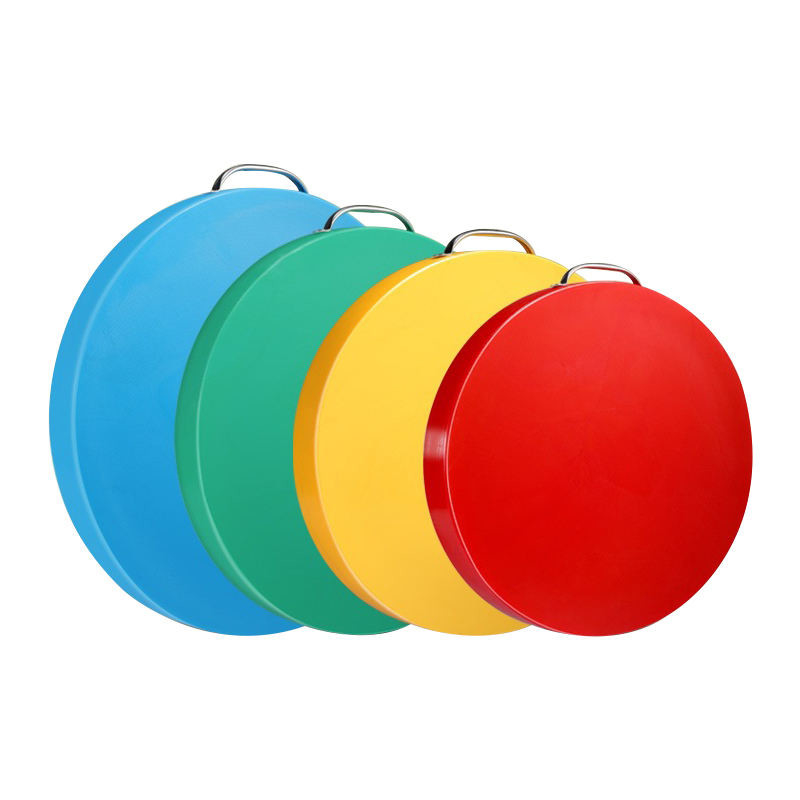
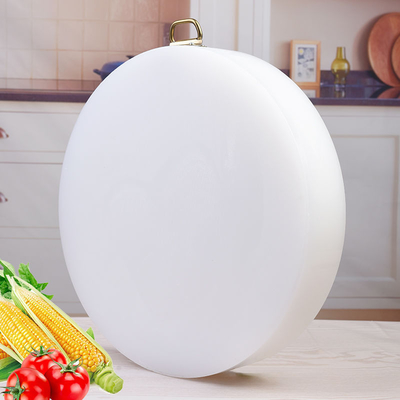
| Kolor:: | Czerwony, żółty, niebieski, zielony, kawa, biały | Rozmiar:: | 350 mm * 250 mm |
| Kształt: | Kwadrat, prostokąt, okrągły | Gęstość:: | 0,94-0,96 g/cm3 |
| Powierzchnia:: | Gładka, matowa, ze skórką pomarańczową | ||
| Podkreślić: | Okrągły blok do krojenia PE,blok do krojenia z polietylenu do użytku domowego,blok do krojenia z tworzywa sztucznego PE |
||
Listing 37672110 - Plastic Cutting Board
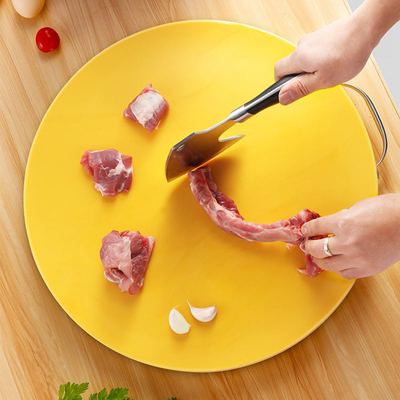
Ta strona dokumentuje grubą deskę do krojenia z polietylenu, którą Tangyin Taixing Engineering Plastics Co., Ltd. kataloguje pod modelem PE Round Cut Chopping Block. Wpis opisuje domową deskę kuchenną, a rekord atrybutów określa materiał, zestaw kolorów, zakres gęstości, opcje powierzchni i odniesienie do rozmiaru 350 mm x 250 mm. Rekord kształtu wymienia kwadratowy, prostokątny i okrągły, więc dokładny obrys dostarczonej deski należy odczytać z zamówienia, a nie tylko z nazwy modelu.
| Attribute | Recorded value for model PE Round Cut Chopping Block |
|---|---|
| Manufacturer | Tangyin Taixing Engineering Plastics Co., Ltd. |
| Model Number | PE Round Cut Chopping Block |
| Item description | Thicken plastic PE round cut chopping block |
| Material | PE virgin 100% |
| Density | 0.94-0.96 g/cm3 |
| Size reference | 350 mm x 250 mm |
| Shape options | Square, rectangle, round |
| Thickness | 10 mm to 50 mm, as printed in the description size table |
| Colour | Red, yellow, blue, green, coffee, white |
| Surface | Smooth, matte, orange peel |
| Certification | ISO9001 quality management system, system level only |
| Place of origin | China |
| Minimum order quantity | 100 pieces |
| Price basis | Negotiable |
| Payment terms | T/T, Western Union |
| Supply ability | 200,000 pieces per month |
| Delivery time | 15-20 days after deposit received |
| Packaging | Wooden crate or pallet, per the commercial record; the description adds plastic film, plywood case, plywood pallet, metal belts and a waterproof cover |
Two records in this package need a decision rather than a quotation. First, the size attribute is 350 mm x 250 mm, which is a rectangular footprint, while the model name reads round and the shape attribute lists square, rectangle and round; a 350 mm x 250 mm board cannot be round, so the outline must be stated on the order and confirmed on the drawing. Second, the colour attribute records red, yellow, blue, green, coffee and white, while the description FAQ lists red, yellow, blue, black, green, gray and double colour. The attribute record is authoritative here, so the six colours above are the recorded set and the FAQ list is treated as a broader statement about the plant's colour capability rather than about this model.

| Outline | Sizes printed in the description | Relation to this listing |
|---|---|---|
| Round | Dia 200 mm, 300 mm, 400 mm, 480 mm, 500 mm, 600 mm, 1000 mm | The family that matches the word round in the model name |
| Square | 200 x 200 mm, 300 x 300 mm, 400 x 400 mm, 450 x 450 mm, 480 x 480 mm, 500 x 500 mm, 580 x 580 mm, 1200 x 1200 mm | Recorded as a shape option, not as the size of this listing |
| Rectangle | 480 x 950 mm, 480 x 1500 mm, 480 x 3000 mm, 500 x 600 mm, 500 x 1000 mm, 500 x 1200 mm, 580 x 980 mm, 580 x 990 mm, 580 x 1100 mm, 580 x 1190 mm, 600 x 1200 mm | Recorded as a shape option; includes lengths well beyond a domestic board |
| Thickness | 10 mm to 50 mm for all chopping boards | The band that applies whichever outline is chosen |
Construction
Model PE Round Cut Chopping Block from Tangyin Taixing Engineering Plastics Co., Ltd. is a solid polyethylene board cut from stock in the 10 mm to 50 mm thickness band, with the outline cut to a square, rectangular or round profile and the face finished as smooth, matte or orange peel. There is no veneer, no laminated core and no coating: the cutting surface, the edge and the underside are the same material, which is the property that lets the board be resurfaced and keeps the edge hygienic after repeated washing.
A board in the lower half of the 10 mm to 50 mm band is light enough to lift and rinse with one hand, and it stays stable on a bench because it is thin enough to sit flat. A board at the top of the band is a block rather than a board: it resists rocking under a cleaver, it can carry a deep score without reaching the far side, and it is heavy enough that a domestic user will leave it in one place. Tangyin Taixing Engineering Plastics Co., Ltd. records the whole band, so thickness is a choice to be made against use, not a fixed property of the model.
Thickness also sets how often the board can be resurfaced. Every resurfacing removes material from the working face, so a thicker board can be brought back to a flat surface more times before it becomes too thin to use. This is the engineering reason a commercial kitchen buys the thicker end of the band while a household buyer buys the thinner end, and it is a more useful comparison than a service life statement, which this listing does not record as an attribute.
The recorded density band is 0.94-0.96 g/cm3, which is a polyethylene board rather than a hard acrylic or a glass-faced board. The practical consequence is that a knife edge penetrates slightly and the board surface takes a score. That score is the mechanism that keeps the knife edge intact, and it is also the reason the board needs renewal: a deeply scored face holds moisture and food residue in the grooves even after washing.
Surface finish changes that interaction. A smooth face presents the least resistance and shows scores plainly, a matte face hides fine scores and gives a slightly drier feel, and an orange peel face holds a film of air and water in its texture so a wet product grips instead of sliding. None of the three is recorded with a roughness value, so the choice is made by sample and by the intended use rather than by a number on this page.
A round board has no corner to chip, which is the reason the round outline is used in a busy kitchen, and a square or rectangular board gains usable area at the cost of four vulnerable corners. On either outline the edge should be broken with a small chamfer or radius rather than left as a machined arris, because a sharp polyethylene edge is easily bruised in handling and a bruised edge is where a crack starts. The underside is not recorded with feet or a non-slip pattern, so a board ordered for a wet bench should have that requirement stated, otherwise the board relies on its own mass and on the friction of a flat polyethylene face against the bench.
The description states that the board is suitable for a commercial dishwasher and refers to a spike temperature above 185 deg C. That statement is carried here as the description's own wording. No test method is recorded for it, and a short dishwasher spike is a different condition from a sustained exposure, so a buyer whose process holds boards at temperature for long periods, or who uses a high-temperature wash tunnel, should have the duty confirmed at quotation rather than inferred from that sentence.
| Element | How it is produced | What to specify on the order |
|---|---|---|
| Outline | Cut from stock to a square, rectangular or round profile | The actual dimensions, since the 350 x 250 mm reference is rectangular while the model name says round |
| Section | Solid PE, 10 mm to 50 mm, density 0.94-0.96 g/cm3 | Thickness, and whether the board must be resurfaceable more than once |
| Working face | Smooth, matte or orange peel finish | The finish by sample, and which face is the working face |
| Edge | Machined arris, to be broken on request | Chamfer or radius size if the board is to be handled wet |
| Colour | Through-colour PE, not a coating | The colour name from red, yellow, blue, green, coffee, white |
Boundaries
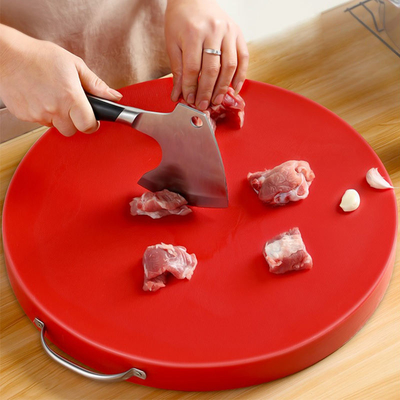
Model PE Round Cut Chopping Block is recorded for household kitchen use, and the description extends the reasoning to any kitchen that wants a board which does not craze, distort, rot or harbour bacteria in the way a wooden or a thin plastic board does. The boundaries below follow from the recorded material, the density band and the 10 mm to 50 mm thickness record.
It fits as a general preparation surface on a domestic bench, as a colour-coded board set where raw and cooked preparation must be kept apart, and as a heavier block where a cleaver or a repeated chop needs mass under it. The six recorded colours are the practical basis for a colour-coding scheme, since the colour is through the section and does not wear off with washing or with resurfacing. A round board also suits a workstation where the board is rotated as the user moves around it.
This listing records no food-contact approval, no standard number and no migration test. The material is recorded as PE virgin 100%, and the description states that the board is non-toxic and odourless, but that is a description-level statement and not a certified result, so a buyer in a regulated food operation must obtain the specific declaration that the operation requires. The board is also not a heat-rated surface: the description's dishwasher statement is not a hob or oven rating, and a hot pan should never be set on it.
The board should not be used as a cutting surface for heavy bone work at the thin end of the 10 mm to 50 mm band, because a cleaver blow transfers through a thin board into the bench and the board takes the deformation. Nor should a thin board be used as a chopping block where the user expects the board to stay put without a non-slip base, since no base is recorded for this model.
Wash and dry the board before first use, then decide which face is the working face and keep to it, so that scores accumulate on one side and the board can be turned over if the first face is later resurfaced. Store the board on edge in a rack rather than flat under other items, because a polyethylene board stored flat with weight on it will take a set. Keep the board away from a direct heat source, and do not stack a wet board against another wet board, since the trapped film between two non-absorbent faces is where odour develops.
A scored face can be brought back by machining a small amount off the working surface, which is possible because the colour and the material run through the full thickness. The limiting factor is remaining thickness, and since this listing records a 10 mm to 50 mm band with no minimum service thickness, the user has to set a retirement thickness and check against it. A board that has become thin enough to flex under the hand should be retired rather than resurfaced again.
Confirm the outline is the shape that was ordered, confirm the thickness against the 10 mm to 50 mm band, confirm the working face is the agreed finish and is free of machining marks, confirm the edge is broken and not sharp, and confirm the colour matches the coding scheme. A board that arrives with a sharp edge or a visible machining dig will be rejected on the line even if every dimension is correct.
Manufacturer
Tangyin Taixing Engineering Plastics Co., Ltd. is the manufacturer of model PE Round Cut Chopping Block. The company describes itself as an engineering plastics manufacturer combining production, sales, design and processing, with more than 20 years of experience, a plant area of more than 25,000 square meters and an annual output of more than 8,000 tons. Its product range includes HDPE sheet and UHMWPE board, which are the stock materials a thick chopping block is cut from, so the board is produced inside the same material chain as the industrial sheet products rather than bought in finished.
The same organisation appears in the company profile and site footer as Beijing Silk Road Enterprise Management Services Co., which operates the same engineering-plastics business. That is one manufacturing and export organisation under two recorded names, and the plant behind model PE Round Cut Chopping Block is the same one behind either name.
The plant lists an imported production line, a moulding press machine, a CNC precise finishing machine, a carving machine, a sander machine, CNC machining centres and AutoCAD based design support. For this model the sheet is produced on the line, the outline is cut and the face is finished on the CNC and sanding equipment, and the sanding step is what produces a matte or an orange peel surface rather than a machined one. Design support matters when a buyer wants a shape that is not on the recorded size list, because the outline and any edge profile can be drawn before stock is cut.
The in-house laboratory equipment listed by the company is an abrasion tester, a universal mechanical tester and an oxygen index tester. Those instruments are aimed at the industrial side of the range, and no test report from them is recorded against model PE Round Cut Chopping Block. A buyer who needs a measured property on a delivered batch of boards should request it as a separate item rather than assume it accompanies the shipment.
The listing records ISO9001, described here as a quality management system covering the manufacture of polyethylene sheet and machined plastic products. It is a system certification, not a product-by-product approval and not a material test report. No certificate number and no issuing body are recorded, so neither is stated on this page. For a food-contact board this distinction matters: the system certification describes how the plant controls manufacture, and it is not a food-contact declaration for the board itself.
The recorded terms are a minimum of 100 pieces, negotiable pricing, T/T or Western Union payment, supply ability of 200,000 pieces per month, delivery in 15-20 days after deposit, and packaging in a wooden crate or pallet. A 100 piece minimum is a distributor quantity rather than a single-kitchen quantity, so a buyer assembling a colour-coded set should plan the mix of colours inside one 100 piece order instead of ordering colour by colour. Supply ability is far above the minimum, which means the 15-20 day window after deposit is the real scheduling constraint. The description adds plastic film, plywood case, plywood pallet, metal belts and a waterproof cover to the packing, and that combination is appropriate for a board that must arrive flat and dry, so the packing requirement should be quoted as described rather than reduced to a bag.
Buyer FAQ
The attribute record for model PE Round Cut Chopping Block carries a size reference of 350 mm x 250 mm, which is a rectangular footprint, while the model name reads round and the shape attribute lists square, rectangle and round as options. Tangyin Taixing Engineering Plastics Co., Ltd. will cut to the outline on the order, so the shape has to be stated explicitly rather than inferred from the model name.
The round sizes printed in the description run from dia 200 mm to dia 1000 mm, and the square and rectangular lists are separate. If a round board is wanted, order it by diameter from that list; if a 350 mm x 250 mm board is wanted, order it as a rectangle. Leaving the shape unstated on an order for model PE Round Cut Chopping Block is the single most likely cause of a board that arrives in the right material and the wrong outline.
Tangyin Taixing Engineering Plastics Co., Ltd. records a 10 mm to 50 mm thickness band for model PE Round Cut Chopping Block, and the choice inside that band changes how the board behaves. A 10 mm board is light and easy to rinse but takes fewer resurfacing passes, and a cleaver blow transfers through it into the bench. A 50 mm board is a block that absorbs the blow in its own section and can be resurfaced several times before it becomes too thin to use.
Because no minimum service thickness is recorded for model PE Round Cut Chopping Block, the buyer or the kitchen should set one. The practical rule is to retire a board when it flexes under hand pressure or when the remaining section is too small to hold the edge shape. A thicker board costs more and lasts through more resurfacing, which is why a commercial kitchen and a household buyer usually choose opposite ends of the same band.
Model PE Round Cut Chopping Block from Tangyin Taixing Engineering Plastics Co., Ltd. is a polyethylene board in the 0.94-0.96 g/cm3 density band, so a knife edge penetrates slightly and leaves a score rather than sliding over a hard surface. That is the behaviour that protects the knife edge, and it is also the reason the board surface has to be renewed: a deep score retains moisture and food residue after washing, and the grooves become the place where the board is hardest to keep clean.
The recorded surface options are smooth, matte and orange peel, and they age differently. A smooth face shows scores plainly and is easiest to judge for renewal; an orange peel face has a texture that holds a film of air and water so a wet product does not slide, and its texture makes fine scores harder to see. For model PE Round Cut Chopping Block the finish should be chosen by sample against the way the kitchen will inspect the board, not only against how it feels when new.
Resurfacing is possible on model PE Round Cut Chopping Block because the colour and the material run through the full section, so machining a small amount off the working face exposes fresh material of the same colour and the board does not lose its appearance. Tangyin Taixing Engineering Plastics Co., Ltd. records the board as solid PE cut from stock, which is the construction that makes this possible.
The number of passes is not recorded and depends on the starting thickness inside the 10 mm to 50 mm band and on the retirement thickness the user sets. Each pass removes material, so a 50 mm block has more passes available than a 10 mm board. Keep one face as the working face until it is resurfaced, and record the measured thickness after each pass so that the retirement point for model PE Round Cut Chopping Block is a measured value rather than a judgement made in a hurry.
Tangyin Taixing Engineering Plastics Co., Ltd. records six colours for model PE Round Cut Chopping Block: red, yellow, blue, green, coffee and white. Because the colour is through the section and not a surface coating, it survives washing and resurfacing, which is what makes a colour-coded set workable over the life of the boards rather than only while they are new.
Six colours allow a scheme that separates raw meat, cooked meat, fish, vegetables, dairy and bakery, but the scheme itself is the buyer's to define and to train. The purchasing point is that all six colours come from the same model, so a set can be ordered in one line with a stated quantity per colour. Note that the description FAQ also lists black, gray and double colour for model PE Round Cut Chopping Block, but the attribute record for this listing does not, so those require a separate confirmation.
The description for model PE Round Cut Chopping Block sold by Tangyin Taixing Engineering Plastics Co., Ltd. states that the boards are suitable for a commercial dishwasher and refers to a spike temperature above 185 deg C. That statement is recorded in the description only; no test method and no attribute-level heat rating are recorded for this listing, and a brief spike is not the same duty as a sustained hold at temperature.
The engineering point is that a polyethylene board softens and distorts when it is held hot while it is restrained, which is why a hot board should be allowed to cool flat rather than stacked while warm. A buyer running a wash tunnel, or holding boards at temperature, should have the duty confirmed with Tangyin Taixing Engineering Plastics Co., Ltd. at quotation. For a domestic or light commercial kitchen, the description's statement is the position of record and the board should still be dried flat after washing.
Tangyin Taixing Engineering Plastics Co., Ltd. records a minimum order of 100 pieces for model PE Round Cut Chopping Block, with supply ability of 200,000 pieces per month and negotiable pricing. For a board that a single kitchen buys in twos and threes, the minimum is a distributor or a project quantity, covering a colour-coded set across several kitchens rather than one site.
The useful way to place a first order of model PE Round Cut Chopping Block is to build the 100 pieces as a mix: state the quantity per colour, the outline (round by diameter, or square and rectangular by dimension), the thickness from the 10 mm to 50 mm band and the face finish. Because the price basis is negotiable, a mixed set of that size is a normal basis for a quotation, and asking for the price per piece at 100 with a break at a higher quantity gives a comparison the buyer can act on.
The commercial record for model PE Round Cut Chopping Block states packaging in a wooden crate or pallet, and the description adds plastic film, a plywood case, a plywood pallet, metal belts and a waterproof cover. Tangyin Taixing Engineering Plastics Co., Ltd. is shipping a flat board that must arrive flat and dry, so the combination matters: film keeps the face clean, the case and pallet keep the stack rigid, the belts hold the stack from shifting, and the waterproof cover keeps a container condensate off the boards.
The delivery window recorded for model PE Round Cut Chopping Block is 15-20 days after deposit received, with T/T or Western Union accepted. A board that arrives with a damp face or with a bowed stack is a rejection risk that the packing is designed to prevent, so open the crate and check flatness and dryness before the boards are issued to a kitchen, while the packing is still intact enough to support a claim.
Receiving
Four checks cover a board delivery, in the order a store room performs them: identity, outline, section and face.
Osoba kontaktowa: Mr. Sales
Tel: +86 152 1104 0646


 Polish